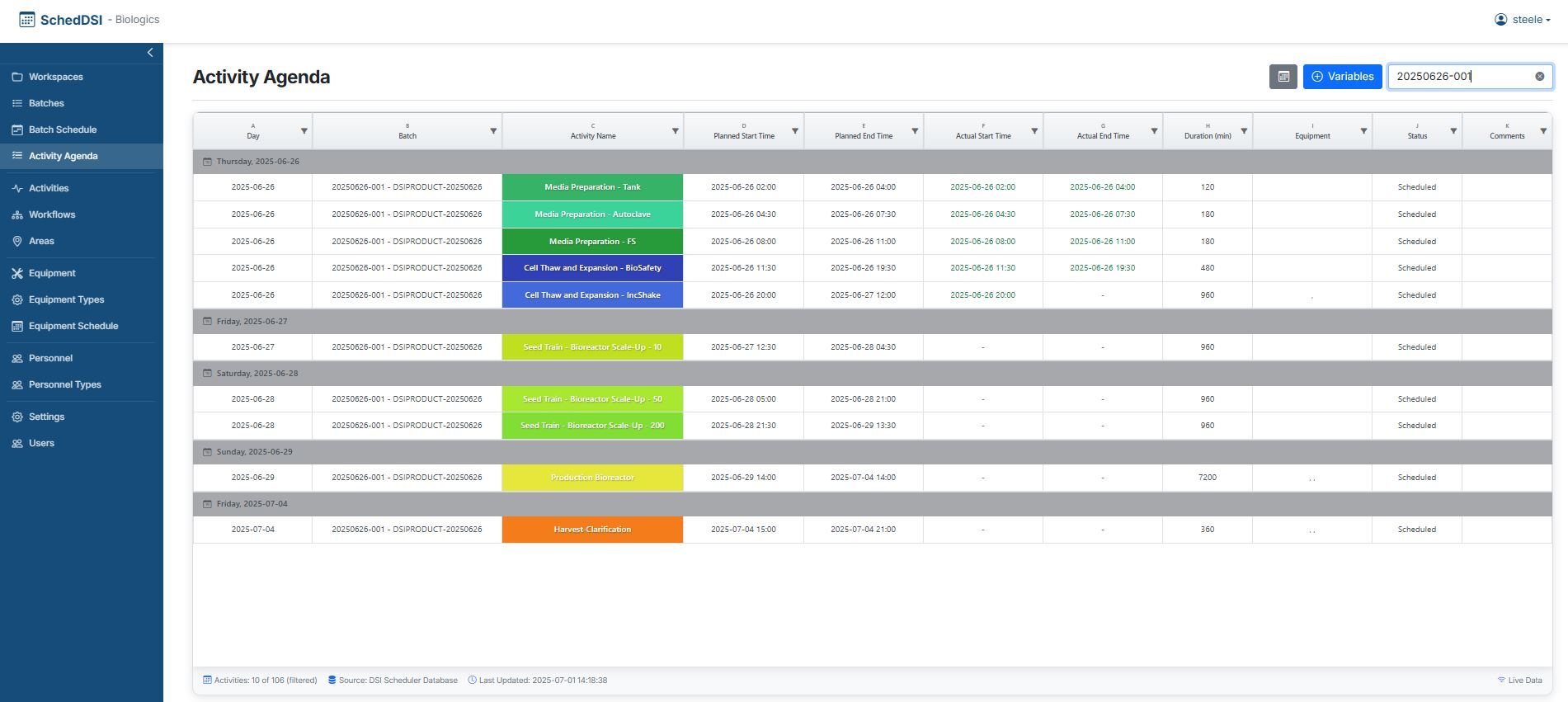
In the manufacturing industry, a small scheduling system managed in Excel can quickly become chaotic and inefficient as a company grows. Transitioning to a web-based tool becomes essential for seamless scaling and effective management.
The pitfalls of an Excel-based scheduling system
At first glance, using Excel for scheduling in manufacturing may seem cost-effective and straightforward. However, as operations grow, the limitations of an Excel-based system become obvious. Shared spreadsheets can be overwritten, version control becomes messy, and multiple personnel editing the same planning file creates conflicting updates and data inconsistencies.
Excel also lacks the dynamic behavior needed for complex manufacturing scheduling. It does not provide real-time collaboration, automated notifications, or clean integration with surrounding systems. The result is delays, miscommunication, and a steady decline in operational efficiency.
Why scaling makes the problem worse
As a manufacturing company grows, the volume and complexity of scheduling tasks increase quickly. What might work for a small team becomes cumbersome and unmanageable with a larger workforce and more intricate production schedules. Updating schedules manually becomes time-consuming and prone to human error.
Excel also does not naturally support simultaneous multi-user collaboration in the way modern operations teams need. That creates bottlenecks where people wait their turn to update information and where downstream teams work from stale data.
Benefits of moving to a web-based scheduling tool
A web-based scheduling tool is designed for growth. It enables multiple users to access and update the schedule in real time, reducing data discrepancies and keeping everyone aligned around the current plan.
These tools also often provide: - automated notifications - integration with software systems around the plant - better reporting and analytics - cleaner workflow visibility - stronger support for operational decision-making
How a web-based tool improves cross-department coordination
Manufacturing depends on coordination between planning, production, quality, supply chain, and customer service. A web-based scheduling system supports this by giving each department access to the information it needs through a shared, current platform.
Production can see material availability. Quality can plan inspections against current progress. Customer service can give more accurate delivery expectations. The entire organization benefits from a common operating picture.
Future-proofing your operations
Moving beyond Excel is not just a tactical fix. It is a strategic improvement that future-proofs manufacturing operations. A scalable web-based system can grow with the company, accommodate more complexity, and support faster, cleaner operational changes.
The goal is not just to replace a spreadsheet. The goal is to make scheduling a real operational capability instead of a fragile workaround.
If your team is hitting the limits of Excel, that is often the clearest sign it is time to move to a purpose-built web-based scheduling platform.