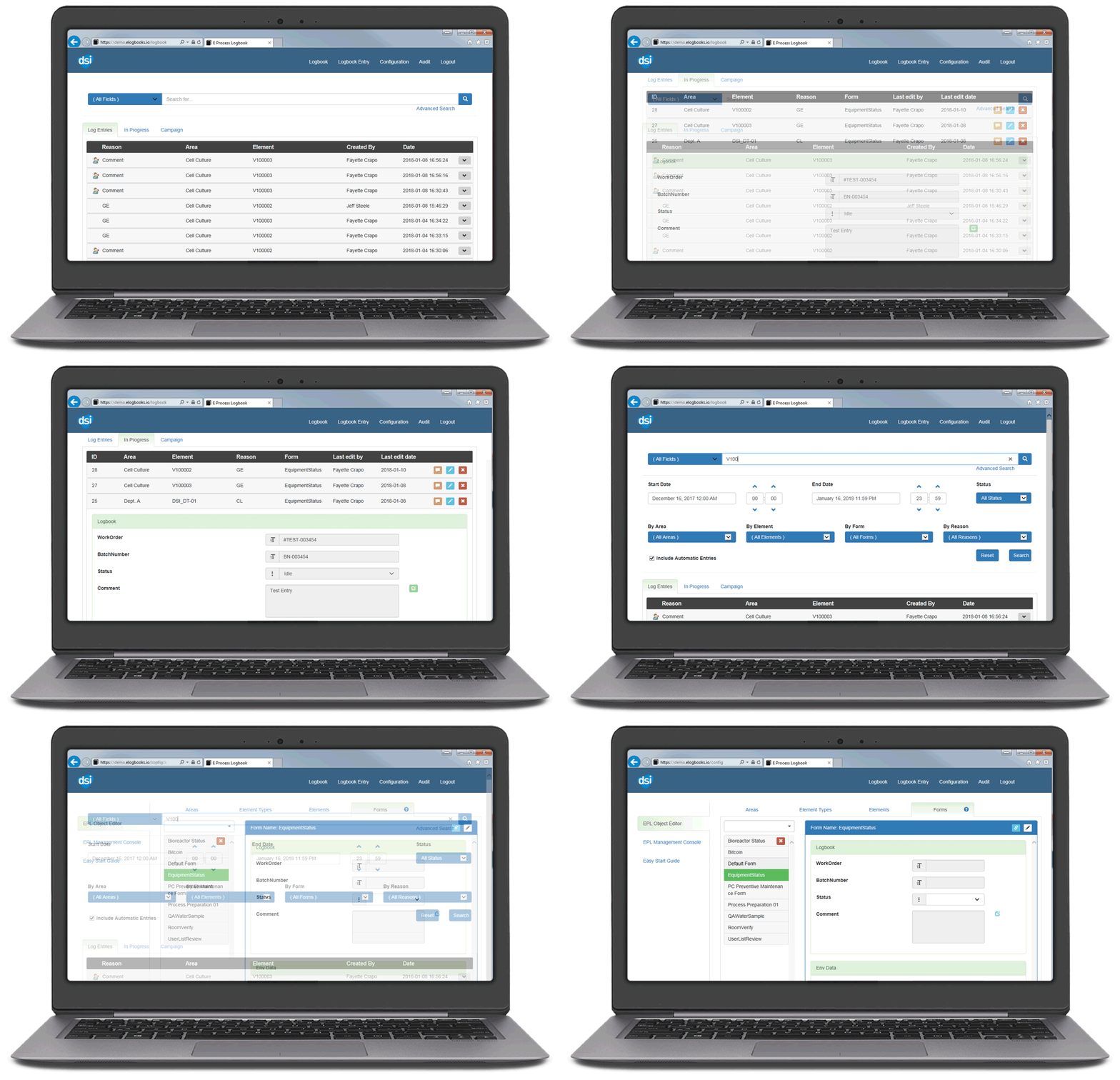
Imagine a world where anyone in your company with the right business knowledge can create robust information-gathering tools and records. That is the promise of eForms.
What eForms is
DSI built eForms as an electronic process logbook, forms, and work instruction system. It is more than a logbook. It is an information-gathering platform that helps operational teams become more productive without requiring a heavy dependence on programmers or long implementation cycles.
Why access to information matters
Access to operational information is one of the keys to good manufacturing and workflow decisions. Traditionally, organizations often depend on expensive enterprise systems and IT-heavy implementation paths to get even relatively simple plant-floor data capture workflows in place.
eForms was designed as an alternative: a modern enterprise application that allows corporations and small businesses alike to roll out data gathering tools without a traditional development project for every new form.
How data gathering usually works without a tool like eForms
A typical process often looks like this: - operations identifies a need to capture data - IT or outside developers are engaged to define requirements - solutions are proposed, debated, redesigned, and reconfigured - databases are created and revised repeatedly - after weeks or months, the tool finally gets rolled out
This process is expensive and slow.
How an eForms rollout works instead
With eForms, the workflow becomes much simpler: - operations identifies the information that needs to be captured - operations creates a form with the built-in form builder - the form is assigned to the right area of the plant - the workflow is tested and deployed - users begin creating immutable, traceable entries immediately
That means the time from idea to rollout can be reduced dramatically.
Why this matters
The real value of eForms is not just that it eliminates paper. It puts form creation, operational workflow capture, and structured recordkeeping directly into the hands of the people who understand the process best.
That reduces dependency on deep IT budgets, shrinks rollout time, and helps companies digitize logbooks, SOPs, work instructions, and more.
Going paperless is not just a cosmetic improvement. It is a way to make operational information easier to capture, easier to trust, and easier to use.